
Most homeowners pour months into planning their kitchen — the countertop material, the cabinet finish, the appliance brand. And then they ignore the one thing that determines whether the space actually works: where it sits, which direction it faces, and how energy moves through it. Vastu Shastra is not superstition. It is an ancient science of spatial orientation — and when applied thoughtfully, it aligns your kitchen with natural forces in a way that modern design alone cannot.
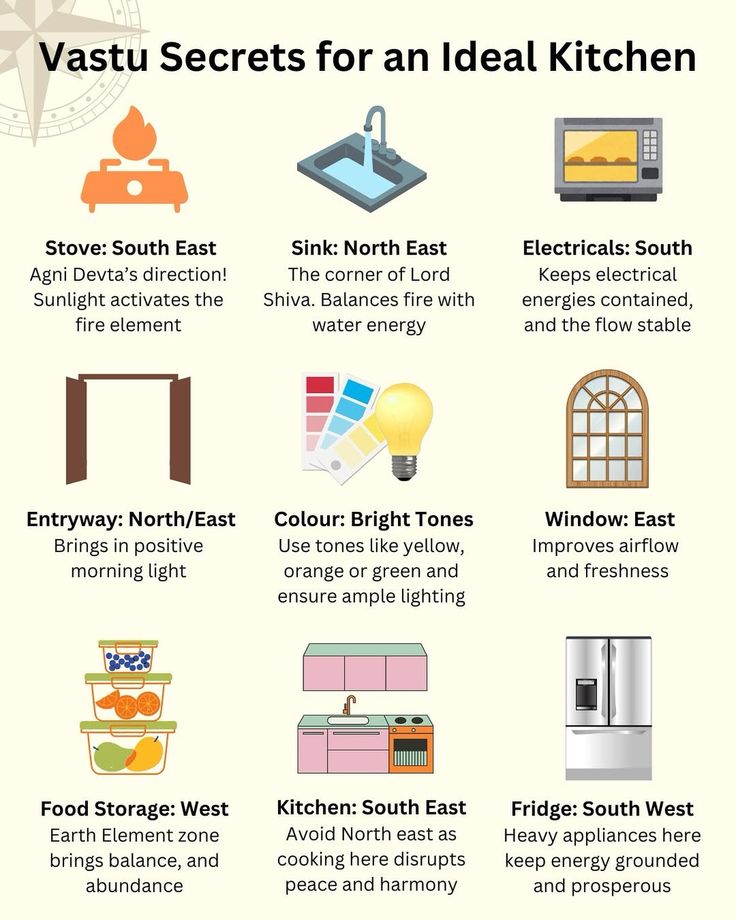
The South-East Is Not a Coincidence — It Is a Command
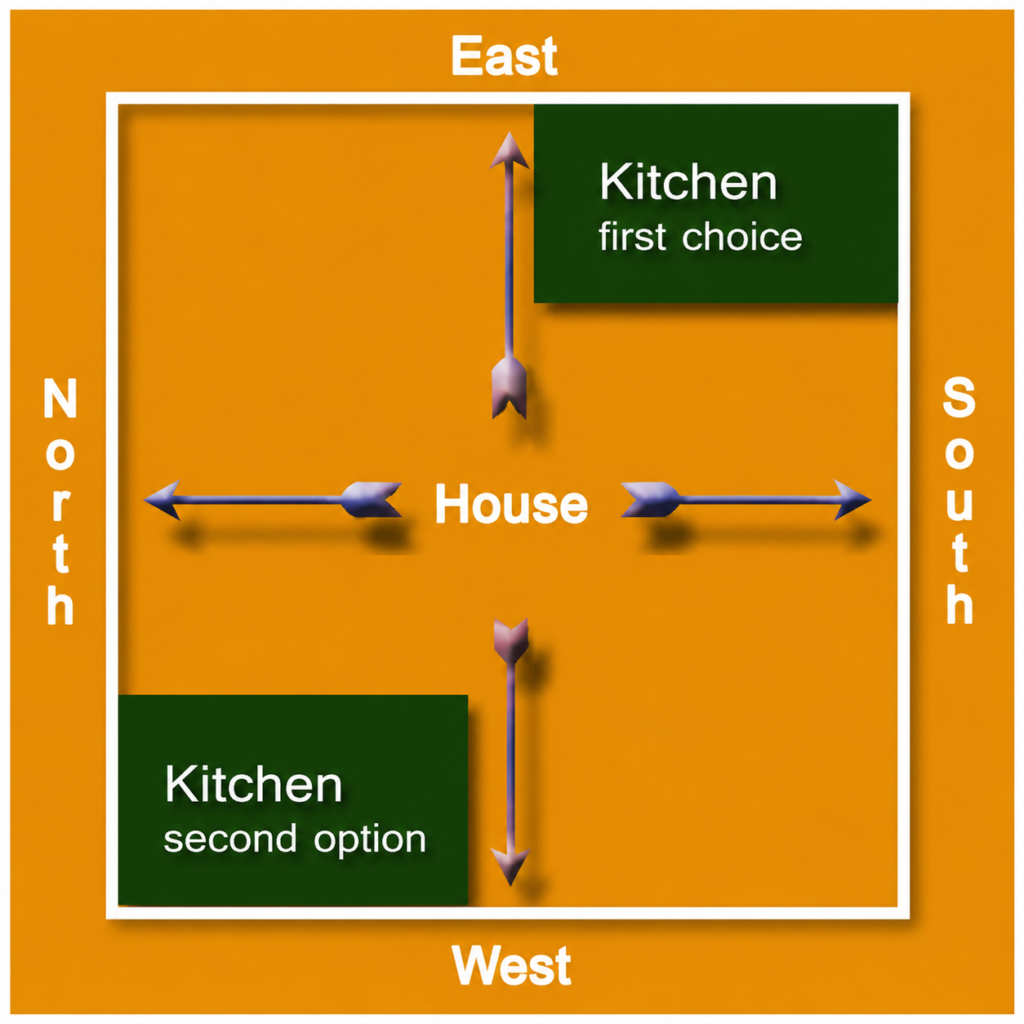
Vastu places the kitchen firmly in the south-east corner of the home — the zone of Agni, the fire element. This is not arbitrary. The south-east receives the morning sun, which provides natural warmth and light exactly when cooking happens most. It also sits farthest from the north-east — the zone of water — preventing the elemental conflict that Vastu warns creates imbalance in the household. When the kitchen occupies the south-east, the fire within it is in harmony with the fire outside. The result is a space that feels energised, not draining. If a strict south-east placement is impossible due to the building’s layout, the north-west is the acceptable alternative. What Vastu categorically rejects is the north-east — placing a kitchen there is the single most disruptive positioning in the entire science. The reasoning is spatial and environmental: the north-east must remain open, light, and water-aligned. A cooking space here creates heat, odour, and energetic resistance in the most spiritually charged corner of the home.
Where You Stand to Cook Shapes Everything Else in the Kitchen
The cook’s position is as important as the kitchen’s position. Vastu is precise on this: the person cooking should always face east. East is the direction of the rising sun, of energy beginning its arc across the day. Cooking while facing east means the cook absorbs that directional energy — focus, clarity, and a sense of completeness in the act. This directly informs where your hob or cooking range must be placed. The stove cannot be pushed against the north or west wall and expect the cook to face east. The stove belongs on the east or south wall of the kitchen — with the cook naturally oriented eastward as they stand at it. There is a secondary reason this matters in modern kitchens: the stove should never be placed directly below a window. In Vastu, the fire element must not be exposed to open sky above it — it creates instability. Windows can flank the cooking area on the sides or be placed on the east wall, but never directly overhead the flame.
The Sink and the Stove Must Never Be Side by Side
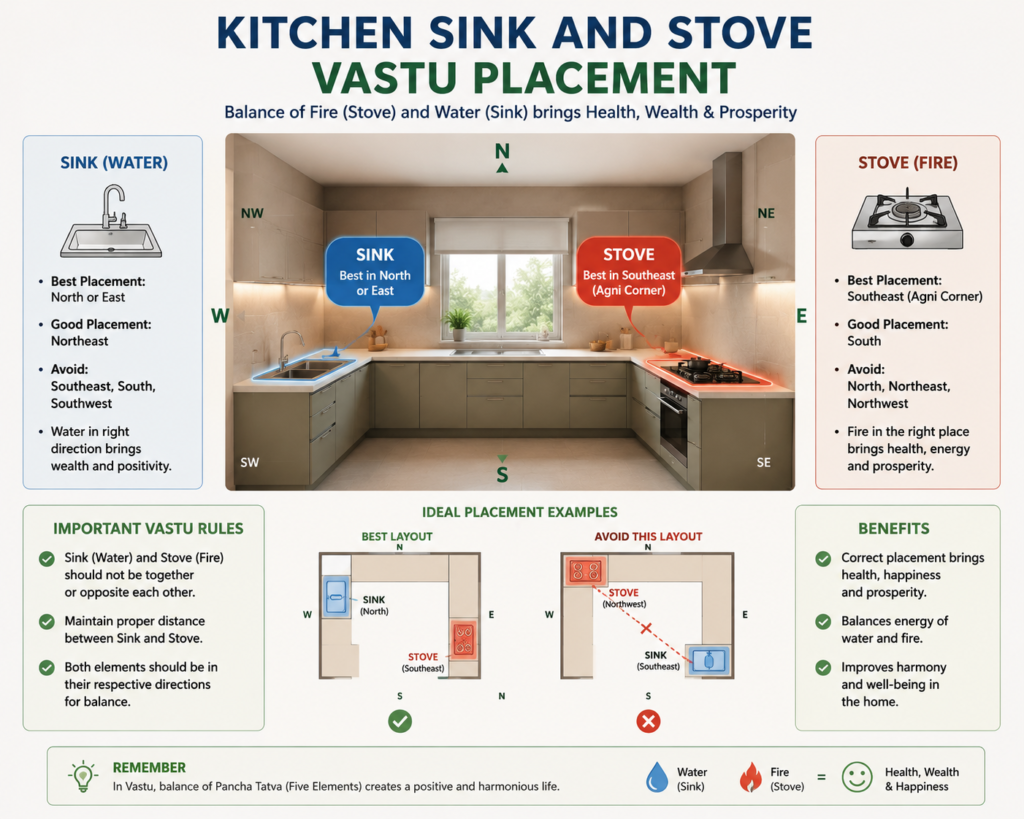
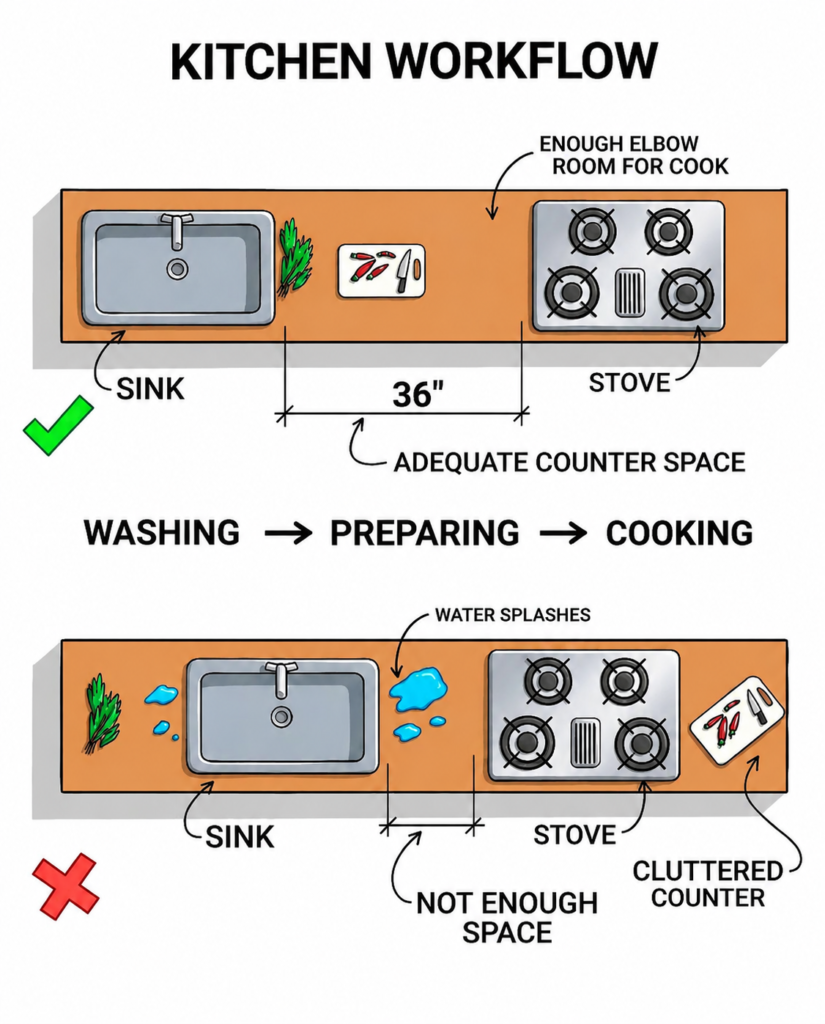
This is the rule most modern kitchen designers unknowingly violate — and it carries the most direct Vastu consequence. The sink represents water. The stove represents fire. In elemental terms, placing them adjacent creates perpetual conflict between opposing forces. Vastu does not ask you to remove one or the other — it asks you to separate them with intention. The sink belongs in the north-east or east of the kitchen. The stove belongs in the south-east. Between them — a counter, a prep area, a drawer bank — something that creates physical distance and elemental separation. In practical kitchen design, this often means the sink and hob occupy different walls or opposite ends of the same wall. This is not a compromise of function. A well-designed kitchen with separated fire and water zones is actually ergonomically superior — it creates a natural workflow triangle that moves efficiently from storage to prep to cooking without cross-contamination of elements. Vastu and good design agree here completely. The irony is that most kitchens ignore both.
Storage, Ventilation, and Light — Vastu Has Rules for All Three
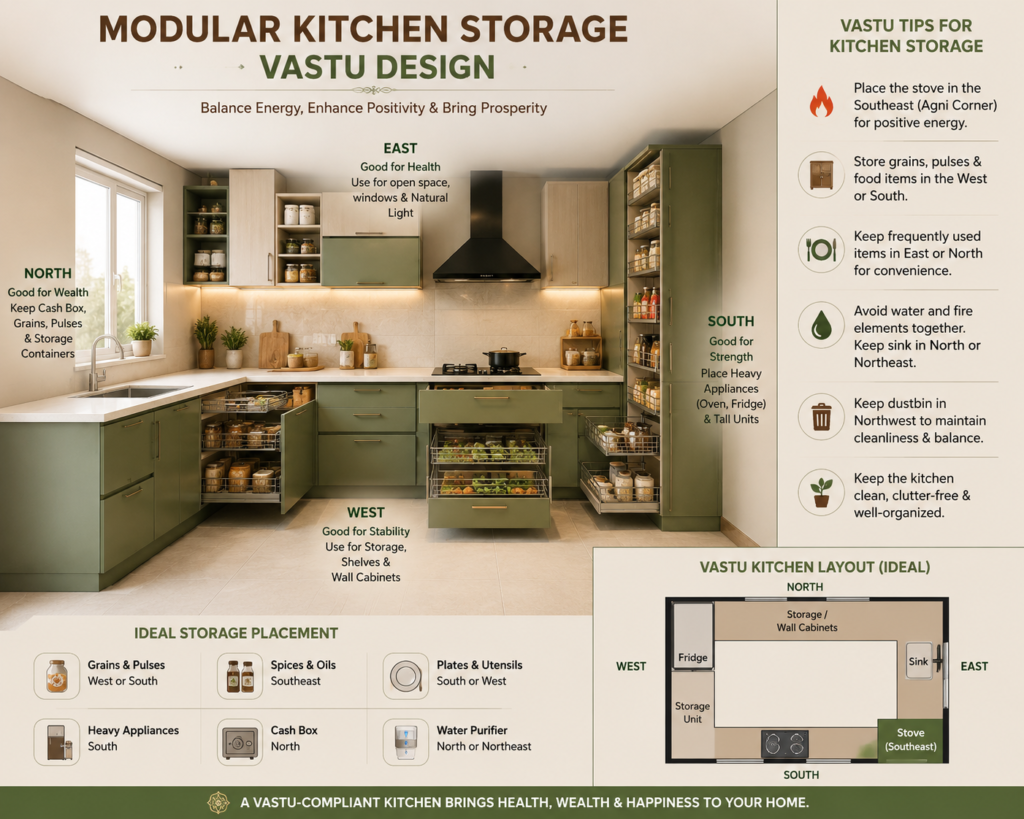
Storage in the kitchen must follow weight-and-direction logic. Heavy items — large vessels, appliances, grain storage — belong on the south and west walls. These are directionally stable zones, built to carry weight both architecturally and energetically. The north and east walls should carry lighter storage: spice racks, everyday utensils, small containers. This keeps the northern and eastern zones open and unobstructed, allowing the morning light and positive directional energy to enter without being blocked by mass. Ventilation is non-negotiable in Vastu — and this aligns perfectly with modern building science. Kitchens must have a window on the east wall. Not just for air circulation, but because east-facing windows bring in morning light precisely when the kitchen is most active. This reduces artificial lighting dependency, prevents moisture buildup, and keeps the space feeling alive rather than stale. Chimney and exhaust placement also matters: ventilation should exit from the east or south. Venting toward the north-east should be avoided — you are pushing smoke and residue into the home’s most sensitive directional zone.
Colour Is Direction Made Visible — Choose It Like an Architect
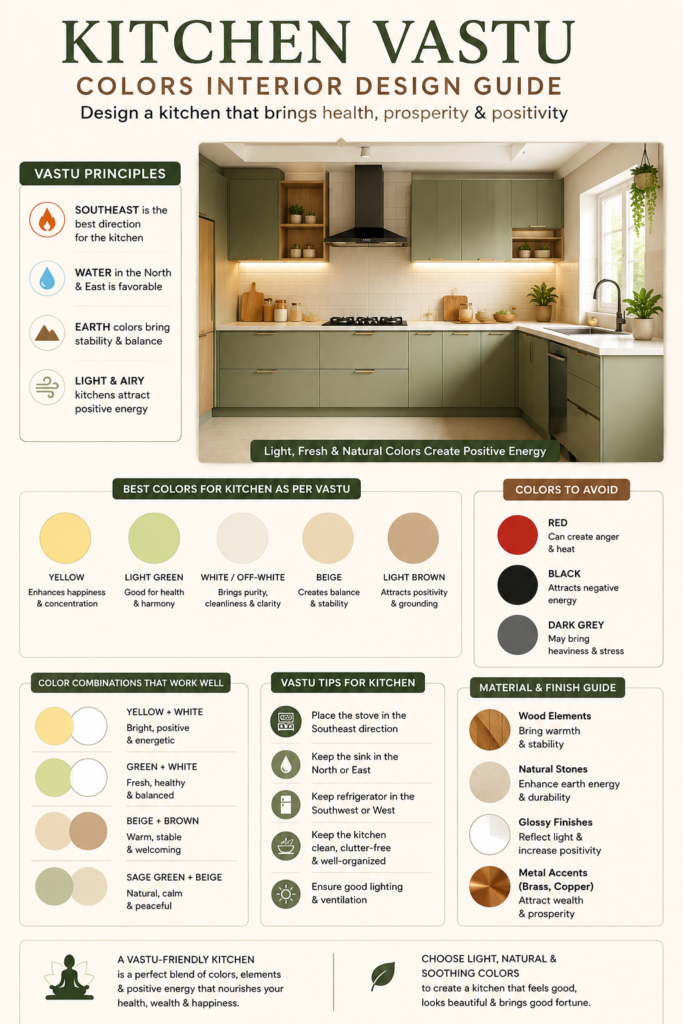
Colour in a Vastu kitchen is not decoration. It is alignment. The south-east zone — the fire zone — thrives with warm, energising tones. Orange, red, yellow, and deep terracotta belong here. Not because they look good, but because they amplify the fire energy that the kitchen is supposed to carry. Whites and creams work throughout as neutral anchors — clean, expansive, reflective of light. They do not conflict with any directional rule and allow the structural Vastu principles to carry the weight. What Vastu explicitly cautions against in the kitchen: black and dark blue. These are water-zone colours — belonging to the north and north-east. Bringing them into the south-east fire zone creates the same elemental conflict as placing the sink next to the stove. In practice, this means avoiding dark slate finishes, deep navy cabinetry, and black countertops as dominant surfaces in a Vastu-aligned kitchen. Accents are permissible. Dominance is not. At N.K. Architects, our kitchen designs do not choose colour as an afterthought. We treat it as the final directional decision — one that either reinforces or undermines every spatial choice made before it.